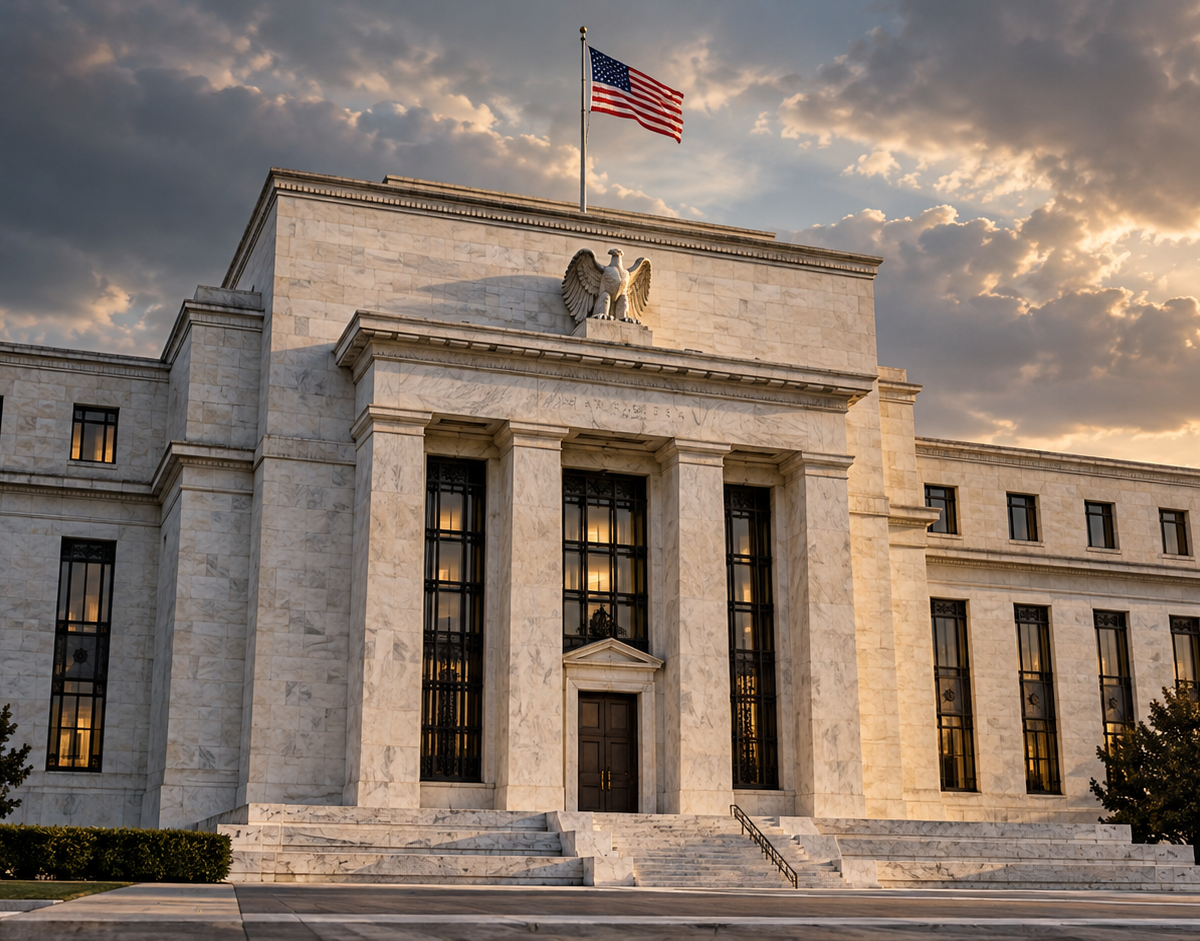
The Federal Reserve held its benchmark interest rate in a range of 3.75% to 4% on Wednesday (Oct. 28). The Federal Open Market Committee's decision passed 10-2: Governor Lisa Cook and Cleveland Fed President Beth Hammack favored a quarter-point increase at this meeting. Markets had expected the hold.
In September, the Fed raised rates for the first time since 2023, its first hike under Chair Kevin Warsh. Inflation has picked up again: the consumer price index (CPI) rose 3.7% in the 12 months through September, driven by gasoline, and core inflation, which excludes food and energy, was 2.6%, according to Fortune and InfoMoney. The decision came less than a week before the U.S. midterm elections on Nov. 3. According to Avenue, Warsh said the elections played no role in the decision. The unemployment rate, at 4.2%, has changed little, and oil above $100 a barrel is cited by analysts interviewed by InfoMoney as the main inflation risk.
The statement included changes in wording. The Fed now describes economic activity as expanding at a strong pace rather than a solid one, said inflation remains elevated and added that gathering more information will help it set the appropriate policy to return inflation to its 2% goal. It also dropped September's language linking a rate hike to a faster return to the target, according to Fortune. At his post-meeting press conference, Warsh said, according to Avenue, that he does not believe in signaling future moves under normal circumstances. Warsh also announced, according to Avenue, that starting in 2027 one of the committee's annual meetings will be devoted solely to strategy, with no rate vote or statement.
What changes for businesses
Higher U.S. rates tend to strengthen the dollar and make U.S. Treasuries more attractive, which can reduce investor appetite for emerging-market assets such as Brazil's. That adds to the pressure on the real seen after the runoff. For Brazilian companies, the effects show up in the cost of imports, the price of dollar-priced services such as software and digital platforms, and the funding costs of those who borrow in foreign currency. According to Avenue, the dollar was stable against the real on decision day, near R$5.35. Importers and companies with dollar-linked debt or contracts typically track these decisions to set currency-hedging strategies.
The dissents reinforced the view that the tightening cycle may not be over. According to InfoMoney, Fernando Saad Benati, global strategist at Avenue, said markets are pricing a probability close to 80% of another hike in December, and consulting firm 4Intelligence expects two more increases, in December 2026 and March 2027. For Brazil, a more hawkish Fed tends to limit room for relief in the exchange rate and in interest-rate futures, which already rose after the election.
“A tactical pause, not a change of course”
— Gustavo Sung, chief economist at Suno Research, to InfoMoney (translated from Portuguese)
What to watch next
- The U.S. midterm elections on Nov. 3.
- Brazil's Copom decision on Nov. 4.
- Upcoming U.S. inflation data (CPI), which will weigh on the Fed's December decision.
- The dollar's moves against the real and oil prices, cited by analysts as the main inflation risk.